What your watch, ring and wristband actually measure
Wrist sensors produce useful data, but they are not lab tests. A guide to what is worth believing and what is worth checking.
24 February 2025 · 6 min
Key points
- Wrist heart rate is an optical estimate, sensitive to motion, temperature and skin pigmentation.
- A sleep score is a statistical reconstruction, not a sleep study.
- An irregular-rhythm notification is a signal to check with a clinician, not a diagnosis.
The optical sensor, briefly
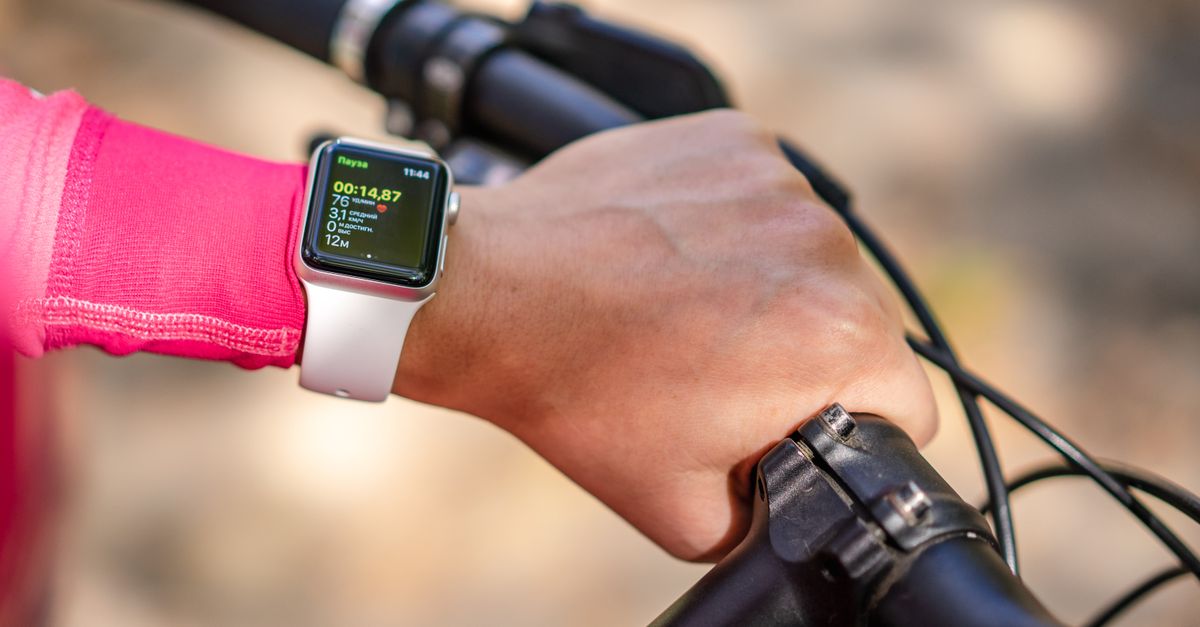
Most wrist devices use photoplethysmography: green light enters the skin and the sensor measures the changing absorption of pulsing blood. It is an elegant and fragile method at once — reliable at rest, uncertain in motion, in the cold, or when the band is too loose.
Heart rate: useful as a trend
A single resting heart rate, measured once, says little. A two-week average compared with last month starts to say something: a sustained rise of five to ten beats per minute can accompany an infection, a stressful period, a medication change or a pregnancy. It is a reason to ask, not a conclusion.
Sleep: a score, not a sleep study
Devices infer sleep stages from movement, heart rate and heart-rate variability. Accuracy for total sleep duration is reasonable; for separating stages it is modest. The practical advice: use the score to watch the regularity of your bedtime — a real health factor — not to hunt for a “missing deep phase”.
Single-lead ECG and rhythm notifications
Some watches can record a single-lead ECG and issue notifications for irregular rhythm suggesting atrial fibrillation. Availability depends on the model and the country of sale, and the result must be confirmed with a standard electrocardiogram before any medical decision. Their real value is bringing to a clinician people who would otherwise have consulted nobody.
Blood oxygen and the other numbers
Wrist oxygen saturation is indicative and does not replace a finger pulse oximeter, let alone a blood gas measurement. Numbers taken at night, in motion, carry wide error margins. If you live with chronic lung disease and track saturation, ask your clinician which device to use and which threshold to act on.
What to do with the data
Export the data before an appointment and bring only the relevant window — two weeks, not two years. Ask who has access to your account and whether your data can be used for research; most services ask for separate consent for that. And remember that a device that raises your anxiety without changing your behaviour is doing you no good.